The Population Council has been conducting operations research in Pakistan since 1957 and established a permanent office in Islamabad in 1991. The Council’s work focuses on improving and expanding access to reproductive healthcare; providing evidence and technical assistance to inform government policies and programs; highlighting population and reproductive health issues; strengthening the capacity of healthcare providers and institutions; and advancing research, advocacy, and evidence-based decision-making. Over the years, the Council has developed close links with public- and private-sector health service providers and government institutions across all provinces of Pakistan.
While its enduring contribution has been through research, the Council’s legacy in Pakistan can also be seen in the institutions it has helped establish, including population research centers in four provinces, the Punjab Population Innovation Fund, and the Population Association of Pakistan. The Council has also supported the establishment of master’s programs in population sciences at four universities in Pakistan.
In 2008, the Council launched the five-year Family Advancement for Life and Health (FALAH) project. Working in 20 underserved districts, the project increased knowledge and practice of healthy birth spacing and advocated for greater access to family planning services. In collaboration with UNFPA, the Council published Capturing the Demographic Dividend in Pakistan, which highlighted the economic case for investing in a faster fertility decline. The Council also conducted research on postabortion care in Pakistan, documenting the number of women experiencing complications from unsafe abortion and identifying policy and programmatic responses.
The Population Council in Pakistan played a leading role in developing Pakistan’s national narrative on population, one of the key recommendations of the Council of Common Interests (CCI) for addressing rapid population growth. Based on the concept of Tawazun, or balance, the narrative reframed family planning within a rights-based approach to voluntary family planning and the Islamic principle of moderation. It has been endorsed and adopted by federal and provincial governments and civil society organizations.
More recently, the Council has continued to support federal and provincial governments in strengthening family planning and reproductive health programs through innovative service-delivery models, social and behavior change communication, private-sector engagement, equitable financing approaches, client-centered counseling, and data-driven decision-making. Through initiatives including the FCDO-supported Delivering Accelerated Family Planning in Pakistan (DAFPAK) programme, the Council has worked with government partners to develop and test scalable approaches that strengthen family planning services and support their integration into health systems.
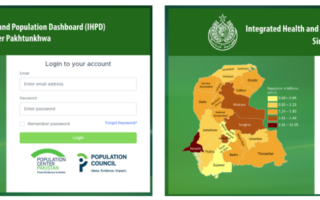
This recent work has also included the development of data-use and decision-support approaches, capacity-building in data analytics and visualization, and social and behavior change initiatives such as the WAQFA campaign, which promotes healthy birth spacing through the nationally endorsed Tawazun narrative.