
The Issue
Many currently available hormonal contraceptive options are made with ethinyl estradiol, which provides a regular bleeding pattern for women who prefer predictable menstrual periods. However, ethinyl estradiol has been associated with an increased risk of a venous thromboembolism (VTE) and other side effects, which can limit acceptability.
For women with higher body mass index (BMI), the risk of VTE while using an ethinyl estradiol-based method is 5-8 times that of women with a higher BMI not using an ethinyl estradiol-based method. However, this risk is still lower than that associated with unintended pregnancy and the postpartum period. It is critical to expand the range of contraceptive options, including ones that provide regular bleeding patterns, that are safe for all individuals.
The Progress
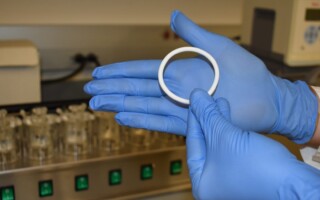
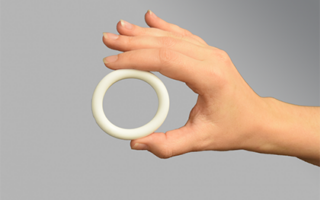
In collaboration with the Eunice Kennedy Shriver National Institute of Child Health and Human Development, the Population Council is developing a novel contraceptive vaginal ring designed to have fewer side effects compared to currently marketed products that contain ethinyl estradiol. The ring could be used for three months and delivers a daily dose of Nestorone®, a progesterone derivative, and estradiol. Estradiol is a physiological estrogen and may be a safer estrogen with for women with contraindications to ethinyl estradiol. Given the potentially improved safety profile, a Phase 2b study, conducted with Eunice Kennedy Shriver National Institute of Child Health and Human Development Contraceptive Clinical Trials Network, was completed in the United States to evaluate safety and efficacy among women with a BMI up to 35. The publication of the results of this trial are pending submission.
The Impact
A new user-controlled vaginal with potential for an improved side effect profile and regular menstrual bleeding pattern expands options for women globally. The Nestorone® estradiol vaginal ring is likely to be one of the first non-oral contraceptives on the market to deliver hormones that are structurally similar to natural estradiol and progesterone. In addition, estradiol is not an endocrine disrupter, and therefore addresses environmental concerns related to the disposal of ethinyl estradiol and related leaching into water systems.