

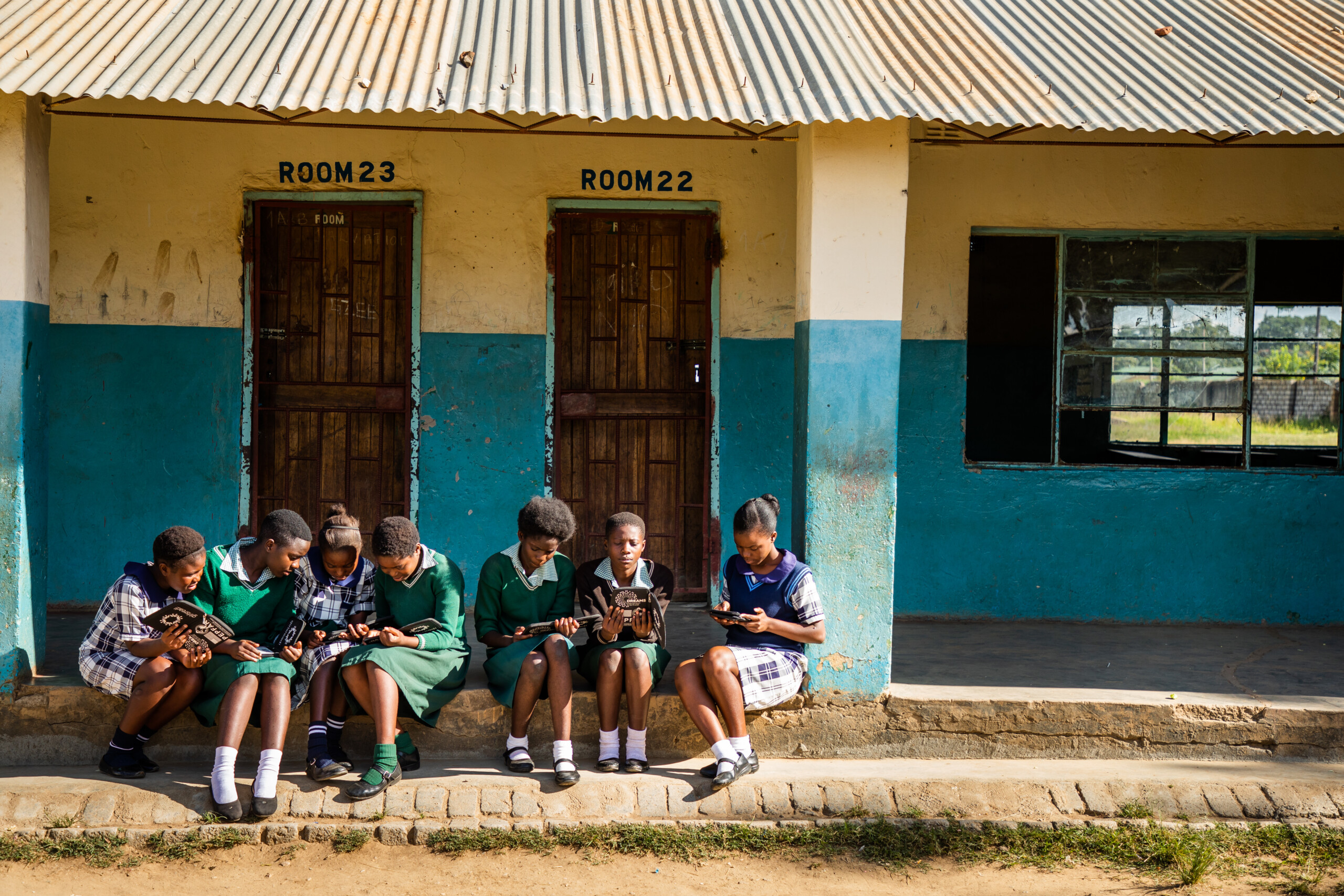
More than 30 years ago, the Population Council made a bold claim: Adolescent girls were overlooked in global development, and existing interventions did not provide the support girls needed to achieve their full potential.
At the time, the United Nations Beijing Platform of Action had brought a spate of commitments for women’s health and rights, but adolescent girls were either excluded or subsumed under the general category of women. If girls were included in development programming, it was largely limited to delaying pregnancy.
Council researchers believed that by designing interventions that reached girls earlier, we could change the trajectory of their life and provide them with the future they deserved. This required understanding many aspects of a girl’s life that had been unexplored and unaddressed: What does she need to stay healthy? How can her community support her schooling? Where can she go to be among her peers in a safe space? How can she be protected from harmful practices such as gender-based violence, child marriage, and female genital mutilation (FGM)?
In response to these gaps, the Council launched a research agenda that grew into the world’s largest body of evidence on what shapes girls’ health, education, safety, and economic opportunities. This included seminal research on:
- What works to prevent child marriage and to improve girls’ education
- Why safe spaces for adolescent girls can improve health, education, and economic outcomes
- How to develop effective community-anchored and girl-centered approaches that reach vulnerable and underserved girls and their families
- The use of data to illuminate the overlapping vulnerabilities of girls and highlight geographies, across and within countries, where girls are experiencing poverty, conflict, and other crises
This evidence, like all of our research at the Population Council, was never meant to live on a shelf. It has been used to design, evaluate, and sustain programs to keep girls in school, to prevent early pregnancy and child marriage, to reduce gender-based violence and FGM, and to support a healthy and productive transition to adulthood. The impact of these programs on girls, their families, their communities, and their countries has led to more funding, government commitment, and programs and policies guided by evidence.
Despite this important progress, many solutions we know work are still not reaching girls at scale. Bridging that gap requires an intentional effort to connect evidence with policy, programming, and investment decisions. The Council’s GIRL Center sits at the center of that nexus. By generating and sharing evidence on how girls live and thrive, the GIRL Center equips decision-makers with the information they need to implement solutions that work with and for girls.
In Kenya, for example, the Council’s Adolescent Girls Initiative – Kenya (AGI-K) program, has had sustained impact on keeping girls in school and delaying marriage and pregnancy. After 10 years of AGI-K, our data shows that girls who had previously been out of school when the program started were more likely to be enrolled in primary and secondary school, less likely to have a child or be married, and less likely to experience violence from a man. The impact of this early intervention in girls’ lives led the Government of Kenya to use AGI-K evidence to design a national social protection program rolling out to 100,000 girls in Kenya this year.
By bringing together the people who turn evidence into action, the GIRL Center accelerates data-backed solutions. At Women Deliver in May, the Girls Deliver community elevated girls’ voices and needs at the largest gender equality conference in the world. This month, the GIRL Center and partners are hosting an Evidence to Impact Symposium in Nairobi to convene researchers, policymakers, civil society, youth organizations and funders with the goal of advancing programs and policies that are evidence-based, accessible, and grounded in girls’ realities.
We have been privileged to witness both the evolution and impact of this work during our tenures at the Council. In a moment when both science and gender equality are increasingly threatened, the Population Council remains committed to keeping our promise to girls — to have voice and choice in their own futures. We are proud of the Council’s legacy of putting girls at the center—and, as we move forward in our next chapter, will continue to deliver rigorous research that challenges the status quo and delivers breakthrough solutions to improve girls’ lives.